Mastering Medical School Requirements in California
medical school requirements in california

Mastering Medical School Requirements in California

Your definitive guide to understanding and fulfilling the rigorous prerequisites for medical school admission in the Golden State.

Start Your Journey

Key Takeaways

  • ✓ California boasts 14 MD-granting medical schools, making it a highly competitive landscape.
  • ✓ Average accepted GPA for California medical schools often exceeds 3.7.
  • ✓ Competitive MCAT scores typically range from 512-518 for successful applicants.
  • ✓ Extensive clinical experience and research are crucial for a strong application.

How It Works

1
Understand Core Prerequisites

Familiarize yourself with the foundational science courses required by most California medical schools. Plan your undergraduate curriculum accordingly to meet these demands.

2
Excel Academically & on the MCAT

Maintain a high GPA and dedicate significant time to preparing for the Medical College Admission Test (MCAT). Both are critical quantitative measures of your readiness.

3
Gain Diverse Experiences

Accumulate meaningful clinical, research, volunteering, and leadership experiences. These demonstrate your commitment to medicine and provide valuable insights.

4
Craft a Compelling Application

Write strong personal statements, secure impactful letters of recommendation, and prepare thoroughly for interviews. Your application tells your unique story to admissions committees.

Navigating the Core Academic Prerequisites for California Medical Schools

A scientist in a lab coat taking notes while analyzing test tubes in a laboratory setting. Photo: Artem Podrez / Pexels
Aspiring physicians in the Golden State face a rigorous academic pathway, and understanding the core academic prerequisites is the crucial first step in meeting medical school requirements in California. While specific course requirements can vary slightly between institutions, there's a common foundational curriculum that nearly all California medical schools expect. Generally, this includes a robust background in biology, chemistry, physics, and mathematics. Most schools require two semesters of general biology with labs, two semesters of general chemistry with labs, two semesters of organic chemistry with labs, and one to two semesters of physics with labs. Beyond these traditional science courses, many California medical schools are increasingly emphasizing biochemistry, often requiring one semester with a lab. Some institutions may also look for coursework in statistics, calculus, English composition, and even humanities or social sciences to ensure a well-rounded applicant. It's imperative not only to complete these courses but to excel in them. Admissions committees scrutinize your academic record, particularly your science GPA (sGPA) and overall GPA (oGPA). A competitive sGPA often hovers above 3.7, reflecting a strong grasp of the scientific principles essential for medical education. Beyond the basic course completion, medical schools are interested in how well you understand and can apply these concepts. This means actively engaging in your coursework, seeking opportunities for deeper learning, and performing well on exams. Many pre-med advisors recommend taking upper-division science courses to demonstrate your ability to handle advanced scientific material. For instance, courses like genetics, cell biology, immunology, or physiology can significantly strengthen your application by showcasing your intellectual curiosity and preparedness for the demanding medical school curriculum. Furthermore, some schools are beginning to recommend or even require courses in psychology and sociology, recognizing the growing importance of understanding social determinants of health and patient psychology in modern medicine. Always check the specific requirements for each California medical school you plan to apply to, as a slight variation in a required lab or a specific course can impact your eligibility. Utilizing resources like the MSAR (Medical School Admission Requirements) database is invaluable for this detailed research. Remember, fulfilling these academic requirements is not just about checking boxes; it's about building a strong scientific foundation that will serve you throughout your medical career. For a deeper dive into preparing for standardized tests, consider exploring resources on MCAT preparation strategies.

The MCAT and GPA: Cornerstone Metrics for California Admissions
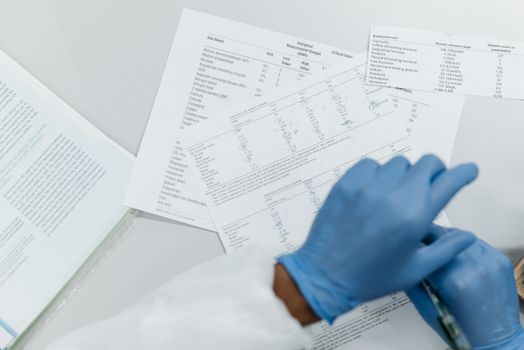
Close-up of gloved hands reviewing printed lab test results on a white surface. Photo: Pavel Danilyuk / Pexels
When it comes to medical school requirements in California, the Medical College Admission Test (MCAT) and your Grade Point Average (GPA) stand out as two of the most critical quantitative metrics. These scores provide admissions committees with an objective measure of your academic preparedness and your ability to handle the rigorous demands of medical school. The MCAT is a standardized, multiple-choice examination designed to assess problem-solving, critical thinking, and knowledge of natural, behavioral, and social science concepts and principles prerequisite to the study of medicine. It's divided into four sections: Chemical and Physical Foundations of Biological Systems; Critical Analysis and Reasoning Skills (CARS); Biological and Biochemical Foundations of Living Systems; and Psychological, Social, and Biological Foundations of Behavior. For California medical schools, competitive MCAT scores typically fall within the range of 512-518, with some top-tier institutions expecting scores even higher. Achieving such a score usually requires months of dedicated study, often involving structured review courses, extensive practice problems, and full-length simulated exams. Your GPA, both overall and science-specific (sGPA), is equally vital. The overall GPA reflects your academic performance across all collegiate courses, while the sGPA specifically calculates grades in biology, chemistry, physics, and math courses. California medical schools are highly competitive, and the average accepted GPA often exceeds 3.7, with many successful applicants boasting GPAs above 3.8. A strong sGPA is particularly important as it directly demonstrates your proficiency in the foundational sciences that form the bedrock of medical education. If your GPA is not as high as you'd like, there are strategies you can employ to strengthen your academic profile, such as taking post-baccalaureate programs or master's degrees to demonstrate your ability to handle graduate-level science coursework. However, these are often considered after an initial attempt at a strong undergraduate record. It's important to remember that while the MCAT and GPA are crucial, they are not the sole determinants of admission. They serve as initial filters, but a holistic review process considers all aspects of your application. Nevertheless, excelling in these areas significantly enhances your chances of receiving an interview invitation. Admissions committees look for consistency in academic performance and an upward trend, indicating growth and resilience. Don't underestimate the time and effort required to achieve competitive scores in both these areas; they are foundational to a successful application to medical school in California.

Beyond the Books: Essential Extracurriculars and Experiences

Laboratory scientist in protective gear working with medical samples. Photo: Pavel Danilyuk / Pexels
While academic prowess, reflected in your GPA and MCAT score, forms the backbone of your application, medical school requirements in California extend far beyond classroom performance. Admissions committees seek well-rounded individuals who have demonstrated a genuine commitment to medicine and a deep understanding of the healthcare landscape. This is where extracurricular activities and meaningful experiences come into play. Clinical experience is paramount. This isn't just about shadowing a doctor for a few hours; it's about sustained engagement in patient-facing roles where you can observe physician-patient interactions, understand the daily routines of healthcare professionals, and gain exposure to various medical specialties. This could involve volunteering in a hospital or clinic, working as a medical scribe, an EMT, or a certified nursing assistant (CNA). The goal is to accumulate hundreds, if not thousands, of hours of direct patient contact, demonstrating your empathy, communication skills, and resilience in challenging environments. Research experience is another highly valued component. California's medical schools, many of which are research-intensive institutions, look for applicants who have engaged in scientific inquiry. This can range from working in a basic science lab, conducting clinical research, or even participating in public health research. What's important is not just the number of hours, but your understanding of the scientific process, your ability to think critically, and your contribution to a project. Publications or presentations at conferences are a significant plus, but even a strong letter of recommendation from a research mentor highlighting your contributions can be very impactful. Community service and volunteering, particularly in underserved communities, demonstrate your altruism and commitment to social responsibility – core values of the medical profession. This could involve working at a free clinic, participating in health education initiatives, or volunteering for organizations that support vulnerable populations. Leadership roles, whether in student organizations, community projects, or even part-time jobs, showcase your ability to take initiative, collaborate, and inspire others. These experiences provide tangible evidence of your maturity, teamwork, and problem-solving skills, all of which are crucial for a future physician. Finally, unique life experiences, hobbies, and talents can differentiate your application. Medical schools are looking for diverse cohorts of students who bring different perspectives and skills to the table. Whether it's proficiency in a second language, a background in the arts, or significant athletic achievements, these elements contribute to a holistic picture of who you are as a person. The key is to engage in activities you are passionate about and to reflect deeply on what you learn from each experience. These reflections will form the basis of compelling essays and interview responses, articulating why you want to pursue medicine. For more insights on building a strong application, explore our guide on crafting a standout medical school personal statement.

Common Pitfalls and Pro Tips for California Medical School Applicants

Person planning tasks with a calendar and notepad on a wooden table. Photo: Ahmed ؜ / Pexels
Applying to medical school in California is notoriously competitive, and avoiding common pitfalls while leveraging strategic tips can significantly boost your chances. Here are some crucial considerations: * **Underestimating the Competition:** California has a large number of applicants for a limited number of spots. Never assume your GPA or MCAT is 'good enough'; always strive for excellence and a well-rounded profile. * **Lack of Clinical Experience:** Many applicants have some shadowing, but insufficient direct patient interaction. Admissions committees want to see that you've been in healthcare settings and understand the realities of patient care. * **Generic Personal Statement:** Your personal statement is your chance to tell your unique story. Avoid clichés and focus on specific, reflective experiences that illustrate your motivation for medicine. * **Poor Letter of Recommendation Choices:** Choose recommenders who know you well and can speak to your specific qualities, not just your grades. A lukewarm letter from a Nobel laureate is less impactful than a glowing one from a research mentor who knows your work ethic. * **Not Researching Schools Thoroughly:** Each California medical school has its own mission and culture. Applying without understanding if you're a good fit for their specific program (e.g., research-heavy, primary care focused, community-oriented) is a wasted application. * **Ignoring Interview Preparation:** The interview is where you bring your application to life. Practice common questions, conduct mock interviews, and be ready to articulate your experiences and motivations clearly and confidently. **Pro Tips for Success:** * **Start Early:** The application process is lengthy. Begin preparing for the MCAT, accumulating experiences, and drafting essays well in advance. * **Seek Mentorship:** Connect with pre-med advisors, current medical students, and physicians. Their insights can be invaluable. * **Maintain a Strong Narrative:** Ensure all parts of your application (essays, experiences, letters) tell a cohesive story about why you want to be a doctor. * **Consider Osteopathic Medicine (DO):** If MD schools are proving too competitive, don't overlook DO schools in California. They offer excellent medical education and a holistic approach to patient care. * **Develop Resilience:** The journey is long and challenging. Learn from setbacks, stay persistent, and maintain a positive outlook.

Comparison

FeatureCompetitive Applicant (CA MD)Strong Applicant (CA DO)Minimum Expectation
GPA (Science)3.7+3.5+3.0
MCAT Score512-518+504-510+500
Clinical Hours500+ (direct patient)300+ (direct patient)100+ (shadowing)
Research Hours200+ (with impact)50+ (exposure)
Leadership ExperienceMultiple rolesSome roles
Community ServiceSignificant, sustainedConsistentSome

What Readers Say

"Understanding the medical school requirements in California felt overwhelming until I found a clear breakdown of what was truly expected. Focusing on my clinical hours and crafting a personal statement around those experiences made all the difference."

Sarah Chen · Los Angeles, CA

"The emphasis on research for California schools was a wake-up call. I dedicated an extra year to a research gap year, which significantly strengthened my application and helped me meet the competitive medical school requirements in California."

David Rodriguez · San Francisco, CA

"This guide helped me strategically plan my undergraduate courses and extracurriculars. I got into my top choice California medical school, and I attribute much of that success to understanding the specific medical school requirements in California early on."

Emily White · San Diego, CA

"While the academic benchmarks for medical school requirements in California are high, I appreciated the focus on holistic review. My slightly lower MCAT was offset by strong leadership and diverse volunteer work."

Michael Lee · Sacramento, CA

"As an out-of-state applicant, navigating the medical school requirements in California seemed daunting. This resource provided the clarity I needed to tailor my application effectively and highlight my unique experiences."

Jessica Kim · Irvine, CA

Frequently Asked Questions

What is the average GPA and MCAT score for accepted applicants to medical schools in California?

For MD-granting medical schools in California, the average accepted GPA typically ranges from 3.7 to 3.85, and average MCAT scores are often between 512 and 518. These are averages, meaning many accepted students have scores both above and slightly below these ranges, especially if other parts of their application are exceptionally strong.

Is it harder to get into a California medical school as an out-of-state applicant?

Yes, it is generally more challenging for out-of-state applicants to gain admission to California medical schools. Public universities in California prioritize in-state residents due to state funding. Private institutions may have slightly higher out-of-state acceptance rates, but competition remains fierce. Demonstrating a strong connection to California can sometimes help.

How much clinical experience do I need to meet medical school requirements in California?

While there's no magic number, competitive applicants for medical school in California typically have several hundred, often 500-1000+, hours of meaningful clinical experience. This should involve direct patient interaction, allowing you to observe and engage with healthcare delivery firsthand, not just shadowing.

Are there any specific courses unique to California medical school requirements?

While most core science requirements are standard across the US, some California medical schools increasingly recommend or require coursework in statistics, psychology, sociology, and sometimes even ethics or humanities. Always check the specific requirements for each institution you are applying to using their official websites or the MSAR database.

Should I apply to both MD and DO medical schools in California?

Many applicants find it beneficial to apply to both MD and DO medical schools in California. While MD schools are often more competitive, DO schools offer excellent medical education with a holistic philosophy. Applying to both can broaden your options and increase your chances of acceptance into a medical program.

Who should consider applying to medical schools in California?

Individuals with strong academic records (high GPA and MCAT), extensive and diverse clinical and research experiences, a demonstrated commitment to service, and a clear understanding of the challenges and rewards of medicine should consider applying. Those with a strong connection to California or a desire to practice in the state may also find it particularly appealing.

What are the risks of applying to only California medical schools?

The primary risk of applying only to California medical schools is the extremely high level of competition. With a large applicant pool and limited spots, even highly qualified candidates may not receive an acceptance. It's generally advisable to apply broadly to a diverse range of schools across the country to maximize your chances.

How are medical school requirements in California evolving?

Medical school requirements in California are increasingly emphasizing a holistic review process, looking beyond just GPA and MCAT. There's a growing focus on applicants' understanding of social determinants of health, cultural competency, and demonstrated resilience. Many schools are also adapting to include virtual components in interviews and pre-application assessments.

Embarking on your medical journey in California is an ambitious but rewarding path. By meticulously understanding and diligently fulfilling the medical school requirements in California, you can position yourself for success. Start planning today to turn your aspirations into a reality.

Topics: medical school requirements in californiacalifornia medical school admissionspre-med californiaMCAT scores californiamedical school application process
Leo List

IE Escorts NO Escorts US Escorts NZ Escorts AU Escorts
Brampton weed
Adultwork EstrelaBet Vai de Bet R7 Bet Betão Galera Bet Rainbet Bet9ja Shop SportyBet BetKing Sisal Loto Foot Hollywoodbets YesPlay Odibets RushBet Jugabet BetWarrior BetCity MSport betPawa Fortebet