How to Easily Book an MRI Scan Appointment
book an MRI scan appointment

How to Easily Book an MRI Scan Appointment

Navigating the process of scheduling an MRI in the US can be complex; this guide simplifies it, ensuring you get the care you need efficiently.

Start Your MRI Journey

Key Takeaways

  • ✓ An MRI (Magnetic Resonance Imaging) uses strong magnetic fields and radio waves to create detailed images of organs and soft tissues.
  • ✓ A doctor's referral is almost always required to book an MRI scan appointment in the US.
  • ✓ MRI costs can vary significantly based on location, facility type, and whether contrast dye is used.
  • ✓ Preparation for an MRI typically involves removing all metal objects and informing staff of any implants or conditions.
  • ✓ Choosing an accredited imaging center ensures higher standards of quality and safety.

How It Works

1
Obtain a Doctor's Referral

Your primary care physician or specialist will determine if an MRI is necessary and provide a referral. This referral is crucial for insurance coverage and scheduling.

2
Research Imaging Centers & Costs

Compare different facilities based on location, accreditation, technology, and estimated costs. Call your insurance provider to understand coverage details and potential out-of-pocket expenses.

3
Schedule Your Appointment

Contact your chosen imaging center directly to book an MRI scan appointment. Be prepared to provide your doctor's referral, insurance information, and medical history.

4
Prepare for Your Scan

Follow all pre-scan instructions from the imaging center, which may include fasting or avoiding certain medications. Arrive early to complete necessary paperwork and ask any last-minute questions.

Understanding the Need for an MRI Scan
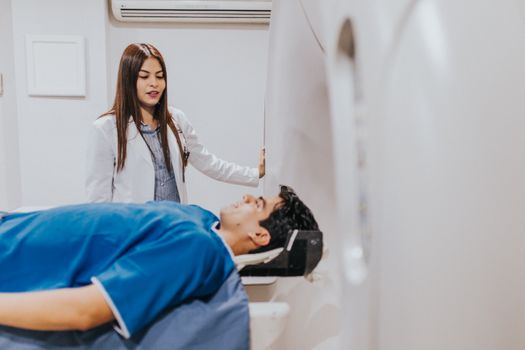
A doctor stands beside a patient in an MRI room, ensuring a smooth examination process. Photo: Charlss GonzHu / Pexels
Magnetic Resonance Imaging (MRI) is a non-invasive medical imaging technique that provides exceptionally detailed images of organs, soft tissues, bone, and virtually all other internal body structures. Unlike X-rays or CT scans, MRI does not use ionizing radiation, making it a safer option for repeated scans or for sensitive patient populations like pregnant women (though specific considerations apply). The technology relies on a powerful magnetic field and radio waves to generate signals from the body's water molecules, which are then processed by a computer to create cross-sectional images. These images are invaluable for diagnosing a wide range of conditions that might be missed by other imaging methods. For instance, an MRI can detect tumors, strokes, infections, and inflammatory diseases in the brain and spinal cord with remarkable clarity. It's also frequently used to assess joint injuries, such as tears in ligaments or cartilage, and to examine internal organs like the heart, liver, and kidneys for abnormalities. Understanding why your doctor has recommended an MRI is the first step in the process to book an MRI scan appointment. They will have considered your symptoms, medical history, and potentially results from other diagnostic tests to determine if an MRI is the most appropriate next step. It's essential to have an open conversation with your healthcare provider about what they hope to learn from the MRI and how the results will inform your treatment plan. This clarity will not only ease any anxieties you might have but also empower you to be a more active participant in your healthcare journey. Knowing the 'why' behind the scan can also help you ask more targeted questions when you prepare for your MRI appointment. For example, if the MRI is for a specific joint, you might inquire about the best position for comfort during the scan or if a specific type of MRI machine (e.g., open MRI) would be more suitable for your condition. This foundational understanding sets the stage for a smoother and more informed booking process.

Navigating Doctor Referrals and Insurance Coverage for Your MRI

Close-up of a smartphone displaying a health record app held in hand with vaccine card visible. Photo: Fabian Hurnaus / Pexels
Before you can even think about where to book an MRI scan appointment, securing a doctor's referral is almost always the prerequisite in the US healthcare system. This referral serves multiple critical functions. Firstly, it ensures that a qualified medical professional has assessed your condition and deemed an MRI clinically necessary, preventing unnecessary procedures. Secondly, and perhaps most importantly for many patients, it is typically required by insurance companies for coverage. Without a valid referral from your primary care physician or specialist, your insurance provider is highly unlikely to cover the cost of the MRI, leaving you responsible for the full, often substantial, expense. Once you have your referral, the next crucial step is to understand your insurance coverage. MRI costs can vary dramatically, ranging from a few hundred to several thousand dollars, depending on factors such as your geographical location, the type of facility (hospital vs. outpatient imaging center), whether contrast dye is used, and the specific body part being scanned. Contact your insurance provider directly – look for the member services number on your insurance card. Be prepared to ask specific questions: * What is my deductible, and has it been met? * What is my co-pay or co-insurance for an MRI? * Is the imaging center I'm considering in-network? * Are there any pre-authorization requirements for an MRI? * Does my plan cover MRIs with contrast dye if needed? It's also wise to get a reference number for your call and the name of the representative you spoke with. Pre-authorization is a common requirement where your insurance company needs to approve the MRI before it's performed. Your doctor's office will usually handle this, but it's important to confirm that it has been completed to avoid unexpected bills. For those without insurance, or with high deductibles, exploring self-pay options or payment plans directly with imaging centers can be a viable alternative. Some facilities offer discounted rates for upfront payment. This proactive approach to understanding both your referral and insurance coverage is paramount to a financially stress-free process when you decide to book an MRI scan appointment.

Choosing the Right Imaging Center and Booking Your Appointment

Doctors standing next to an MRI machine showcasing modern medical technology and professionalism. Photo: MART PRODUCTION / Pexels
Selecting the appropriate imaging center is a pivotal step in the process to book an MRI scan appointment. Not all facilities are created equal, and your choice can impact not only your comfort but also the quality of the images and the expertise of the interpreting radiologists. When evaluating potential centers, consider several key factors. First, look for accreditation. Organizations like the American College of Radiology (ACR) accredit imaging facilities that meet rigorous standards for equipment, personnel, and quality control. An ACR-accredited center signifies a commitment to high-quality patient care and imaging. Second, consider the type of MRI machine available. Standard MRIs are enclosed, which can be challenging for individuals with claustrophobia. Many centers now offer 'open MRI' machines, which are less confining, or 'wide-bore' MRIs that offer more space while still being enclosed. Discuss these options with your doctor if claustrophobia is a concern. Third, evaluate the center's reputation and patient reviews. Online reviews can offer insights into wait times, staff professionalism, and overall patient experience. Fourth, inquire about the radiologists' subspecialties. For complex conditions, a radiologist specializing in the specific body part being scanned (e.g., musculoskeletal, neurological) can provide a more precise diagnosis. Once you've narrowed down your choices, it's time to book an MRI scan appointment. Call the imaging center directly. Have your doctor's referral, insurance card, and a list of any questions ready. You will typically need to provide your full name, date of birth, contact information, and the reason for the MRI as indicated on your referral. The scheduler will then work with you to find an available date and time. Be prepared for potential wait times, especially for non-urgent MRIs or at popular facilities. It's advisable to be flexible with your scheduling if possible. During this call, confirm any pre-scan instructions, such as fasting requirements or medication adjustments. Also, inquire about parking availability, what to bring on the day of the scan, and if there are any forms you can fill out in advance to save time. This detailed approach ensures a smooth booking and preparation experience for your MRI. Understanding your MRI results will be the next important step after your scan.

Essential Preparation and What to Expect During Your MRI
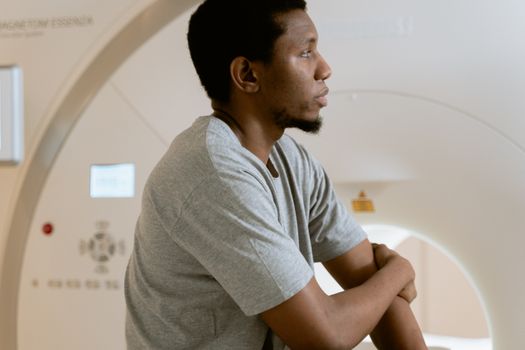
A man sits before a CT scanner, preparing for a medical examination, conveying a sense of anticipation. Photo: MART PRODUCTION / Pexels
Proper preparation is crucial to ensure accurate results and a smooth experience when you book an MRI scan appointment. The specific instructions will depend on the area of your body being scanned and whether contrast dye is used, but some general guidelines apply. * **Inform Staff of Medical History:** Before your appointment, and again upon arrival, thoroughly discuss your medical history with the imaging center staff. This includes any allergies, kidney problems (especially if contrast is used), pregnancy, and crucially, any metal implants or foreign objects in your body. This is a critical safety step, as the strong magnetic field of the MRI can interact with metal. Examples of things to disclose include pacemakers, artificial joints, cochlear implants, surgical clips, shrapnel, and even certain tattoos or permanent makeup (which can contain metallic particles). * **Remove All Metal:** On the day of your MRI, you will be asked to remove all metal objects, including jewelry, watches, hearing aids, dentures, hairpins, and clothing with metal zippers or buttons. You may be asked to change into a hospital gown. * **Fasting or Medication Adjustments:** For some MRIs, particularly those of the abdomen or pelvis, you may be instructed to fast for several hours beforehand. In other cases, you might be advised to temporarily stop certain medications. Always follow the specific instructions provided by your doctor or the imaging center. * **Arrival Time:** Plan to arrive 15-30 minutes early to complete any remaining paperwork and go through a final screening process. During the MRI itself, you will lie on a movable table that slides into the MRI scanner, which is typically a large, tube-shaped machine. It's vital to remain as still as possible throughout the scan to prevent blurry images. The machine will make loud knocking or thumping noises during the imaging sequences, so you will be provided with earplugs or headphones. Communication with the technologist is maintained through an intercom system, and you'll often have a call button to press if you need assistance. Some scans may involve the injection of a contrast agent (gadolinium) through an IV, which enhances the visibility of certain tissues or abnormalities. The entire procedure can last anywhere from 30 minutes to over an hour, depending on the complexity of the scan. While the experience can feel daunting, understanding these steps can significantly alleviate anxiety when you book an MRI scan appointment.

Comparison

FeatureOutpatient Imaging CenterHospital Radiology DepartmentSpecialized MRI Clinic
Cost (Self-Pay)LowerHigherModerate to High
Wait TimesShorterLongerVariable
Availability of Open MRIOften availableLess commonSpecialty focus
Emergency CapabilityLimitedFull Emergency SupportLimited
Radiologist SubspecialtyVariableOften availableHigh likelihood
Overall Patient ComfortHigh priorityVariableHigh priority

What Readers Say

"Booking my MRI scan appointment through their online portal was incredibly easy. I received clear instructions and confirmation emails, making the whole process stress-free. The staff were also very helpful on the day of the scan."

Sarah J. · Austin, TX

"After my doctor recommended an MRI, I dreaded the scheduling. This guide helped me understand the insurance aspects and find an accredited center quickly. The facility was top-notch and the results were prompt."

Mark D. · Chicago, IL

"I needed an urgent MRI for a knee injury. Following the advice to call multiple centers, I managed to book an MRI scan appointment for the very next day. The clarity on what to expect made a huge difference in my anxiety levels."

Emily R. · Miami, FL

"The process to book an MRI scan appointment was mostly smooth, though getting pre-authorization from my insurance took longer than expected. The imaging center staff were patient and guided me through each step, which I appreciated."

David L. · Seattle, WA

"As someone with claustrophobia, finding an open MRI was essential. This resource was invaluable in helping me locate a suitable facility and confidently book an MRI scan appointment that met my specific needs. Highly recommend!"

Jessica M. · Denver, CO

Frequently Asked Questions

What is the average cost to book an MRI scan appointment in the US?

The average cost for an MRI in the US can range from $1,000 to $5,000 or more, depending on the body part, whether contrast dye is used, the facility type (hospital vs. outpatient clinic), and your geographic location. Insurance coverage plays a significant role in your out-of-pocket expenses, so always verify with your provider.

Do I need a doctor's referral to book an MRI scan appointment?

Yes, in the vast majority of cases in the US, you will need a doctor's referral or prescription to book an MRI scan appointment. This ensures medical necessity and is almost always required by insurance companies for coverage. Without it, you may be responsible for the full cost.

How long does it typically take to get an MRI appointment?

Wait times to book an MRI scan appointment can vary widely based on your location, the urgency of the scan, and the specific imaging center. Non-urgent MRIs might have a wait of several days to a few weeks, while urgent cases can often be scheduled within 24-48 hours. Calling multiple centers can help find earlier availability.

Can I eat or drink before my MRI scan?

Preparation instructions vary depending on the type of MRI you are having. For some scans, particularly of the abdomen or pelvis, you may be asked to fast for several hours prior to the appointment. For others, there are no dietary restrictions. Always follow the specific instructions provided by your doctor or the imaging center.

What is the difference between an open MRI and a closed MRI?

A closed MRI is the traditional tube-shaped machine, which can be challenging for claustrophobic individuals. An open MRI has a more open design, with the magnetic field often being horizontal rather than surrounding the patient entirely, offering more space and comfort. Both types provide diagnostic images, though image quality can sometimes vary.

Who should avoid an MRI scan?

Individuals with certain metal implants or devices, such as pacemakers, cochlear implants, certain aneurysm clips, or neurostimulators, generally cannot undergo an MRI due to the strong magnetic field. It's crucial to inform your doctor and the MRI technologist of any metal in or on your body. Pregnancy also requires special consideration.

Is an MRI scan painful?

An MRI scan itself is a painless procedure. You won't feel the magnetic field or radio waves. The most common discomforts are related to lying still for an extended period, the loud noises from the machine (which earplugs or headphones help mitigate), and potential claustrophobia in a closed scanner. If contrast dye is used, you might feel a brief cold sensation during injection.

What advancements are being made in MRI technology?

Advancements in MRI technology include higher field strength machines (3T and 7T MRIs) for even greater image detail, faster scanning sequences to reduce patient time in the scanner, and AI-powered image reconstruction for enhanced clarity and efficiency. Researchers are also developing more patient-friendly designs and new contrast agents for specific diagnostic purposes.

Don't let the complexities of healthcare deter you from getting the diagnostic imaging you need. Use this comprehensive guide to confidently navigate the process and book an MRI scan appointment, ensuring you receive timely and accurate care. Your health is worth the informed effort.

Topics: book an MRI scan appointmentMRI cost USMRI preparation guidefind MRI centerscheduling MRI
Leo List
Brampton weed
Adultwork